
Weight Loss Ads in 2026: What Hims, Ro, and Top GLP-1 Brands Actually Run
Teardown of live 2026 weight loss ads from Hims, Ro, and scaling GLP-1 telehealth brands: real Meta Ad Library hooks, compliance guardrails, and playable video formats.
 By Chris Rudy, founder of AdactedUpdated 13 min read
Most weight loss ads on Meta fail for one of two reasons: either they get flagged by Meta's Personal Attributes and health policies, or they look identical to the last fifty talking-head clips a viewer already scrolled past.
To see what actually holds up at scale right now, we pulled active US ads and flagship campaigns from Hims, Hers, Ro, and Noom across the Meta Ad Library, Google Ads Transparency Center, and national TV, then compared them against the video formats working for challenger GLP-1 and telehealth brands. The gap between what big public telehealth companies run and what a scaling challenger brand needs to run is wide, and misunderstanding it is one of the most expensive mistakes in telehealth advertising.
Why Weight Loss Ads Look Completely Different in 2026
Weight loss and GLP-1 advertising sits at the intersection of two strict filters: Meta's health policy enforcement and Meta's Andromeda retrieval system.
First, Meta aggressively reviews ads that imply negative self-perception, promise rapid timelines, or lean on dramatic before-and-after body shots. An ad that calls out a viewer's body directly risks rejection, reduced delivery, or ad account restrictions. Every serious telehealth advertiser has shifted away from body-shaming hooks toward access, biology, convenience, and lifestyle relief.
Second, under Meta Andromeda, visually similar creatives compete inside the same retrieval bucket. If your account runs ten versions of a creator standing in a kitchen holding a vial with slightly different opening captions, Meta treats them as near-duplicates. Even when an ad passes compliance, creative fatigue arrives fast unless you feed the auction genuinely different visual formats.
Hims and Hers Ads Breakdown: Oral Pills, Poll Hooks, and Zero-Shame Framing
Looking across Hims and Hers's live weight loss ads on Meta, Google, and national TV shows one consistent playbook: lower stigma, remove needle anxiety, and make starting a clinical intake feel as simple as taking a short consumer quiz. Below are the four exact creative patterns they run right now.
1. Making the Healthcare System the Villain (Not the Viewer's Body)
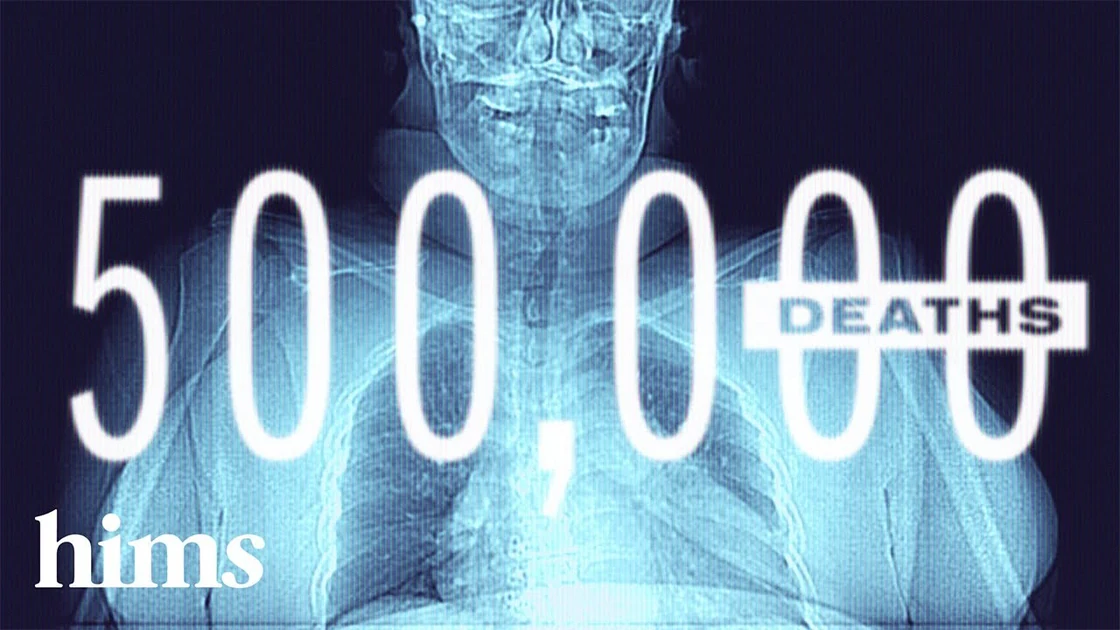
At the top of the funnel, Hims avoids shame-based before-and-after body hooks completely. In its Big Game commercial ("Sick of the System"), the opening frame leads with a stark blue X-ray and a bold public-health callout ("500,000 DEATHS"), blaming a broken healthcare system and high barriers to care rather than the viewer's willpower. That systemic framing earns massive attention without triggering Personal Attributes or body-shaming policies.
2. Native UGC Hooks: Oral Wegovy Pill Timelines and Instagram Poll Stickers
In the Meta feed, Hers shifts straight into native phone-shot UGC built around two immediate scroll-stoppers. Play both live ads below and notice the exact pacing:
- The seasonal oral-pill hook (left): Opens in a car seat asking "What could happen if you take the Wegovy pill once a day before Thanksgiving?" Within five seconds it puts the bottle and single tablet in hand to dissolve needle fear, cites the clinical trial average (14% to 20% body weight) with the full trial disclaimer on frame, contrasts an awkward doctor's waiting room against filling out the quiz from the couch ("No in-person visits. No insurance required. 100% online."), and closes on the full FDA-approved medication lineup.
- The interactive poll-sticker hook (right): Opens with native Instagram "YES / NO" poll stickers ("Want Mounjaro in Canada?" ticking to 95% YES, followed by "Can you afford $99?" at 90% YES) over a real KwikPen in hand, then cuts rapidly through doorstep delivery, a live screen recording of the mobile eligibility flow, and a direct "See if you qualify today" close.
3. Quiz-First Meta Statics Built for Half-Second Scanning
Alongside UGC video, Hers runs clean 4:5 Meta statics structured for viewers who never turn sound on. Look at the two complementary layouts below:
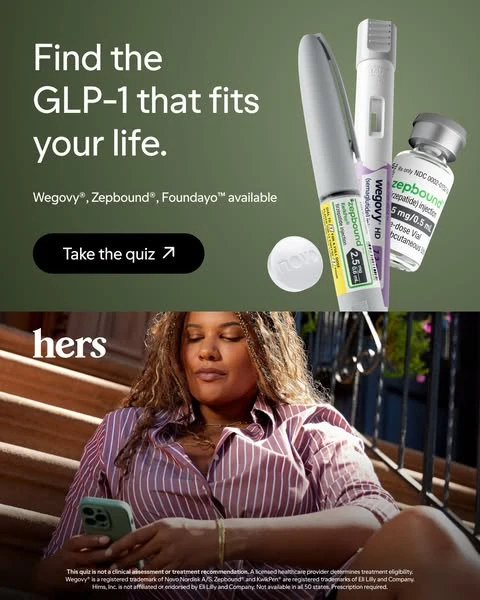
- The multi-option quiz card (left): Splits the frame in half. The top panel shows four recognizable GLP-1 options together (Zepbound KwikPen, Wegovy pen, oral pill, and Zepbound vial) under "Find the GLP-1 that fits your life" with a crisp "Take the quiz" button. The bottom panel softens the medical pitch with a relaxed lifestyle portrait scrolling on her phone, anchored by full prescription footnotes at the base.
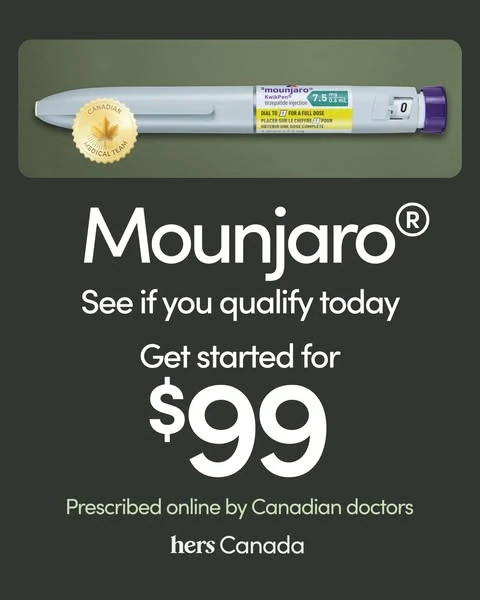
- The single-product qualification card (right): Strips away lifestyle photography entirely on dark olive: KwikPen + clinician badge at top, bold "Mounjaro: See if you qualify today" and "Get started for $99" in the middle, and "Prescribed online by Canadian doctors" right above the brand mark.
4. Consumer-Grade Studio Product Framing Across Display
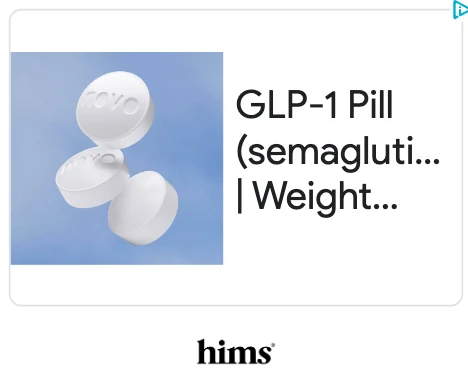
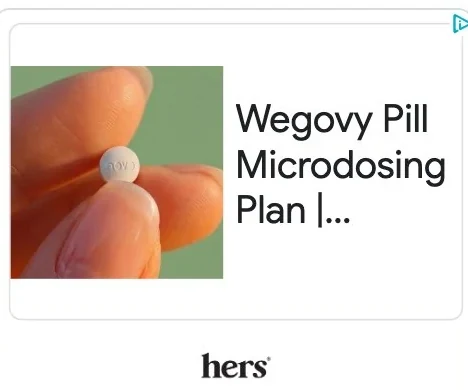
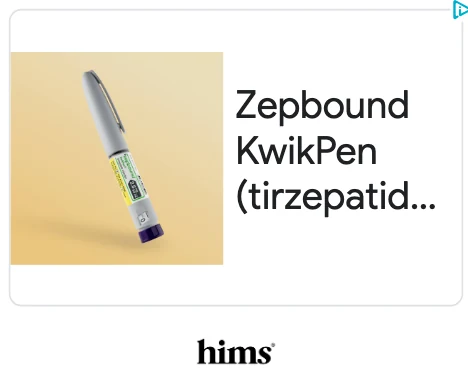
Off Meta, Hims and Hers carry the exact same low-stigma visual system into Google Display. Instead of sterile clinic stock photography, they shoot the oral semaglutide pill on calm blue, real fingers holding a microdose Wegovy pill on pastel mint, and the Zepbound KwikPen floating on warm sand cream. Paired with active primary copy that emphasizes "once-daily weight loss with zero shots", licensed providers, and 100% online access, every touchpoint looks like a modern consumer brand rather than a pharmacy.
Ro Ads Breakdown: Oral Pill Pricing, Celebrity Authority, and Free Coverage Checks
Ro takes a noticeably different route to the same buyer. Where Hims and Hers lean on consumer product minimalism and native quiz UGC, Ro combines mainstream sports-icon credibility with aggressive cash-pay transparency and a front-and-center free GLP-1 insurance check that removes cost friction before the click.
1. Vertical Meta Feed Ads: Oral Wegovy Pill Video and Direct Price Anchoring
Inside Instagram Reels and Stories, Ro puts its strongest hooks directly in the top half of the 9:16 frame so viewers catch the offer before swiping:
- Serena Williams oral-pill split-screen video (left, playable): Opens with "GLP-1s come in a pill now? Yes, and they're on Ro" stacked over a macro pill close-up, walks straight into "Real GLP-1 results at the lowest cash price", shows a real tablet screen recording of the online intake form, and closes on "Join Serena on Ro / Check your insurance for free."
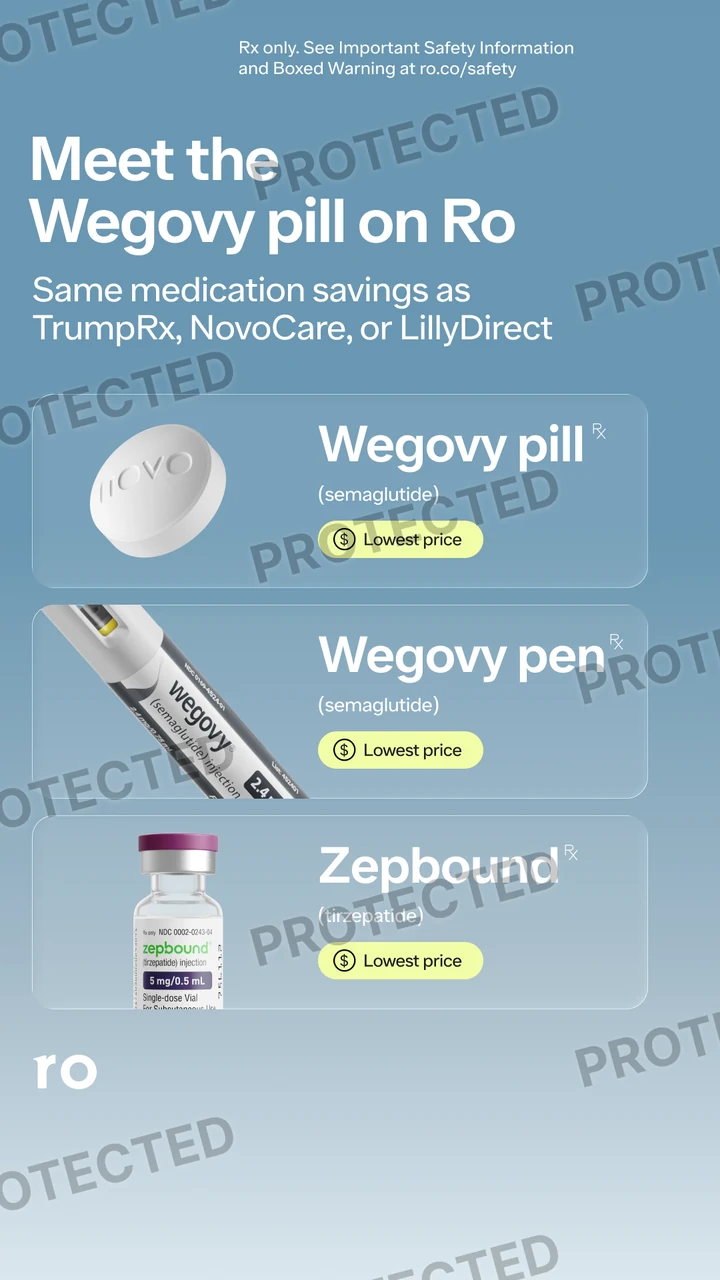
- The cash-savings comparison static (center): Leads with "Meet the Wegovy pill on Ro: Same medication savings as TrumpRx, NovoCare, or LillyDirect" and stacks three clean product cards (Wegovy pill, Wegovy pen, Zepbound vial), each tagged with a yellow "Lowest price" badge.
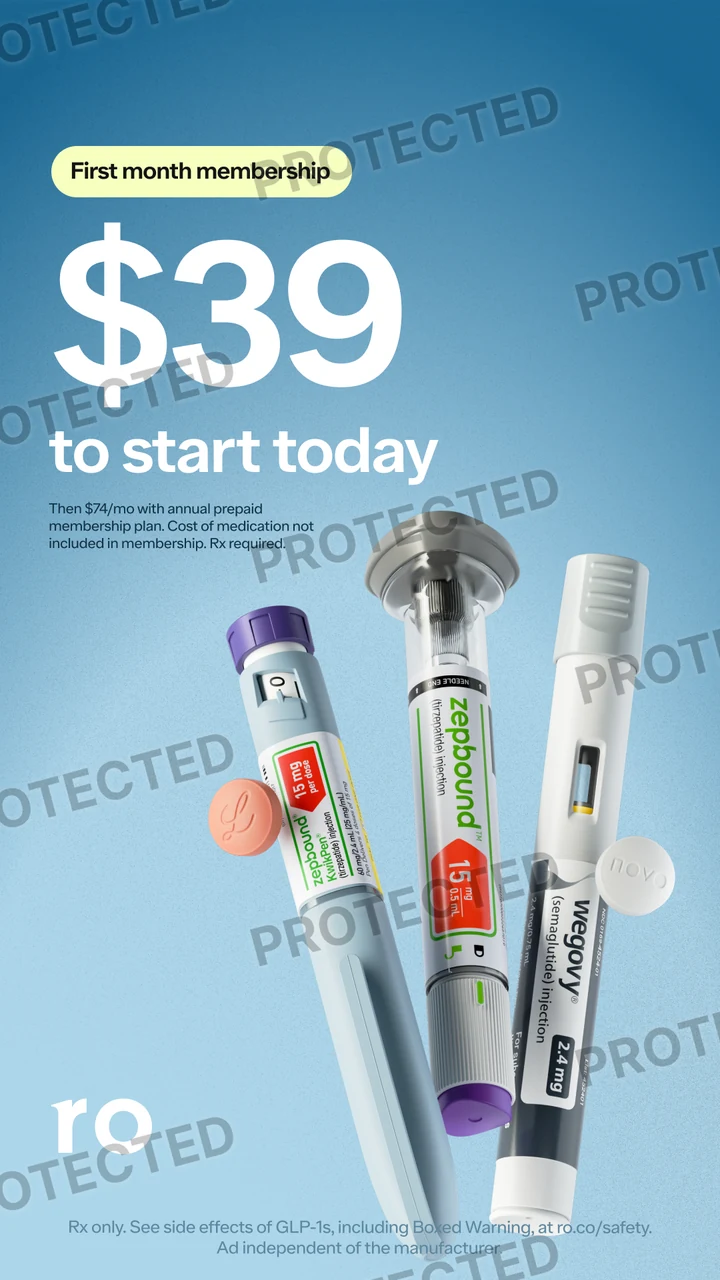
- The low-friction starter-price static (right): Strips the entire 9:16 screen down to "First month membership: $39 to start today" above the Zepbound KwikPen, Zepbound auto-injector, Wegovy pen, and oral tablets, with the follow-on membership terms and Rx disclosure printed right underneath the headline.
2. Destigmatizing GLP-1s With Household Athletes (Serena Williams and Charles Barkley)
Above the feed layer, Ro anchors upper-funnel brand trust to two of the most recognizable athletes in America, directly dismantling the myth that GLP-1 treatment is a willpower shortcut:
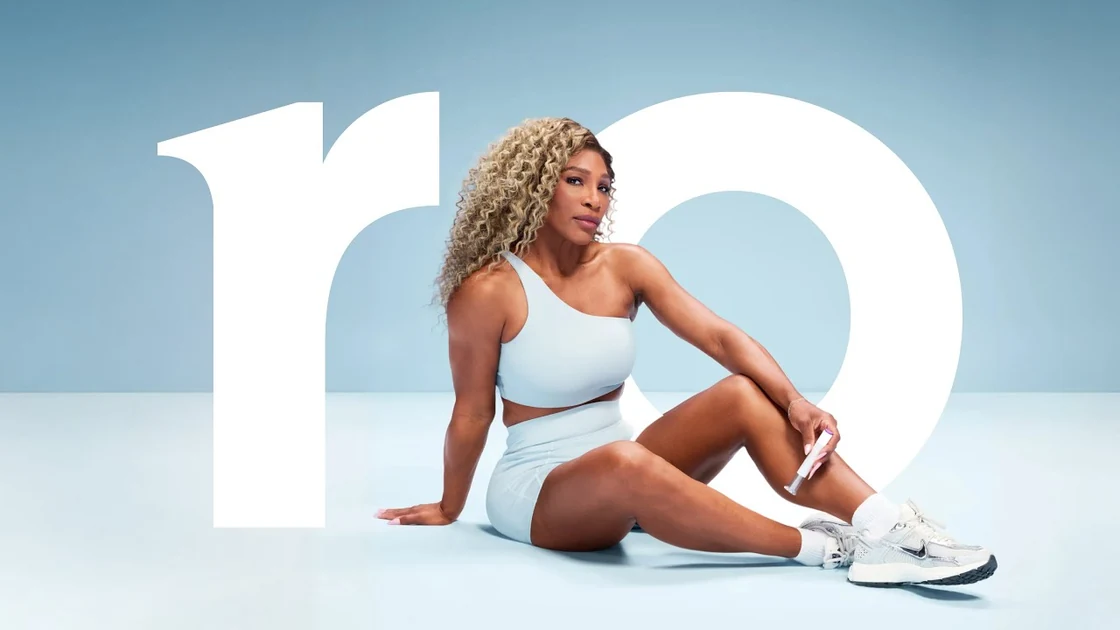
- Serena Williams Super Bowl LX ("Healthier on Ro", left): Places an elite champion holding a GLP-1 pen in front of the oversized white "ro" logo, reframing metabolic care as mainstream, science-backed health.
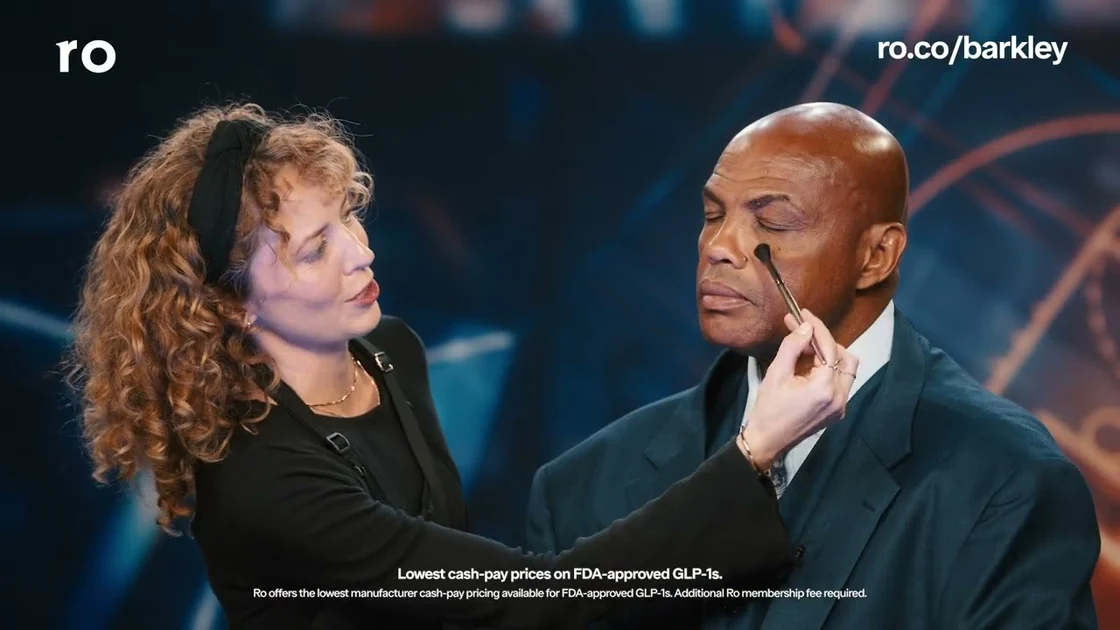
- Charles Barkley ("New Suit", right): Uses candid backstage humor paired with an explicit on-screen value proposition ("Lowest cash-pay prices on FDA-approved GLP-1s") and a dedicated vanity URL ("ro.co/barkley"), backed on Meta by copy like "Even hall-of-famers like Charles Barkley choose Ro for their GLP-1s."
3. Turning Insurance Anxiety Into a Free Coverage-Check Hook
Across display and retargeting, Ro's live creatives rarely ask cold traffic to commit upfront. Instead, all three creatives below lead with insurance clarity and real-member proof:
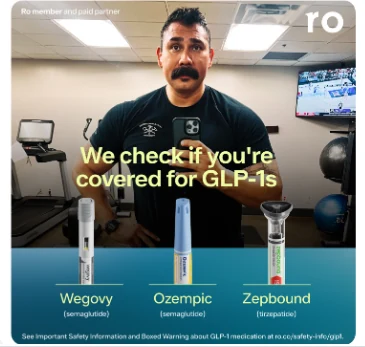
- The coverage-checker creator static (left): Puts a relatable gym member holding his phone above a labeled three-pen lineup (Wegovy, Ozempic, Zepbound) under "We check if you're covered for GLP-1s."
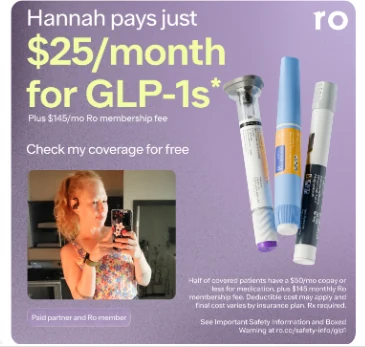
- The member copay UGC static (center): Pairs an unpolished mirror selfie ("Paid partner and Ro member") with concrete copay proof ("Hannah pays just $25/month for GLP-1s*"), three brand-name pens, a "Check my coverage for free" subhead, and full membership-fee disclosures baked inside the image.
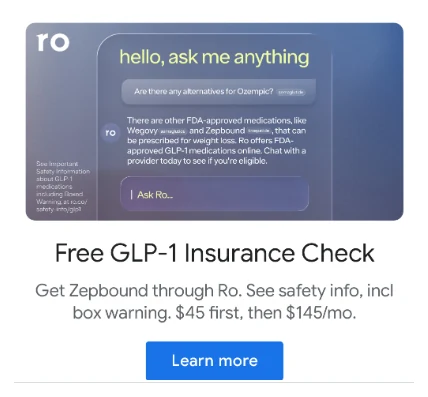
- The interactive Q&A unit (right): Mimics a chat box asking "Are there any alternatives for Ozempic?", replies with FDA-approved Wegovy and Zepbound, and funnels curious readers straight into "Free GLP-1 Insurance Check."
4. Compliance Built Directly Into Every Visual Template
Notice one detail shared by every Ro creative above: compliance is never bolted on as an afterthought. Paid-partner tags, separate membership-fee lines next to starter or copay numbers, and direct Boxed Warning links ("ro.co/safety" / "ro.co/safety-info/glp1") live inside the artwork itself. Templatizing compliance lets Ro rotate dozens of celebrity, creator, and price hooks without constant policy rejections.
Noom and Legacy Weight Loss Ads: Microdosing and Habit Framing
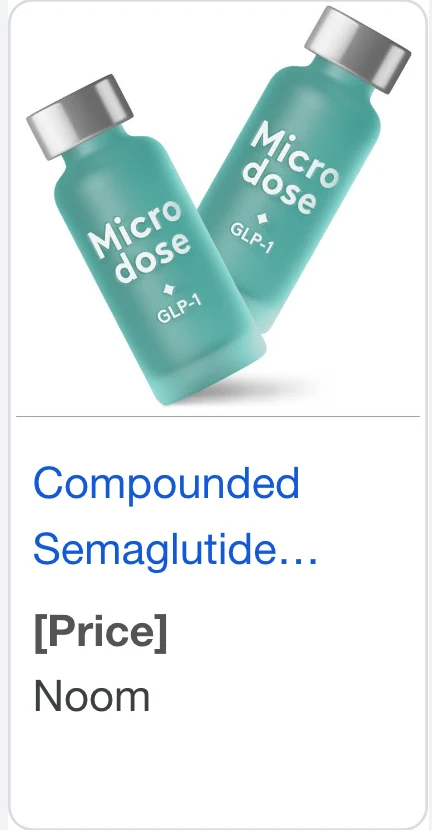
Outside Hims and Ro, legacy weight-loss brands like Noom split their paid creative into two clear lanes. On the GLP-1 side, Noom brands compounded semaglutide around gentle "Microdose GLP-1" teal vials to win over GLP-1-curious buyers worried about full-dose side effects.
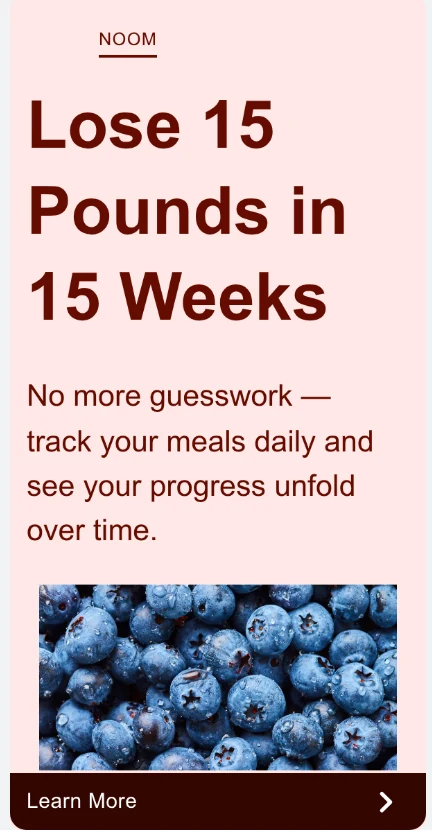
Right alongside medication ads, Noom keeps running clean editorial cards built around concrete habit timelines ("Lose 15 Pounds in 15 Weeks") and crisp food photography. Running both tracks keeps acquisition wide while letting the intake quiz route each click to either behavioral coaching or prescription care.
Hims Ads vs. Ro Ads vs. Challenger Telehealth Brands
Studying Hims, Hers, and Ro ads is useful, but copying them blindly backfires if you do not have a household brand name or Super Bowl celebrity budget. Here is how the playbook changes for a challenger GLP-1 or telehealth brand.
| Dimension | Hims & Hers Ads | Ro Ads | Challenger Telehealth Brands |
|---|---|---|---|
| Primary Scroll-Stopper | Systemic-villain spots, seasonal oral Wegovy pill UGC, Instagram poll stickers, clean product statics | Celebrity anchors (Serena Williams, Charles Barkley), free insurance-check headlines, member copay statics | Distinct visual formats (animated stories, stop-motion, 3D explainers, AI UGC) |
| Core Trust Mechanism | Consumer-grade product framing, clinical trial disclaimers on screen, online quiz walkthroughs | Celebrity social proof, real member copay stories, transparent Boxed Warning disclosures | Visual mechanism proof, relatable character stories, clear claim framing |
| Funnel Entry | "Take the quiz" / "See if you qualify today" online clinical intake | "Free GLP-1 Insurance Check" and cash-pay comparison | Short clinical eligibility quiz matching the exact angle of the ad |
| Biggest Risk If Copied Blindly | Clean product grids get scrolled past when nobody recognizes your logo yet | Impossible to replicate Serena or Barkley credibility on a performance budget | Running one talking-head UGC style until Meta Andromeda clusters every ad together |
What Challenger GLP-1 Brands Run Instead of Celebrity Budgets (6 Playable Examples)
When a scaling telehealth brand cannot buy a Hall of Famer to stop the thumb, the creative format itself has to earn the first three seconds. Running visually distinct formats side by side solves both halves of the problem: it breaks feed blindness for cold buyers, and it gives Meta Andromeda completely separate visual signals to match to different pockets of your audience.
Here are six real, playable telehealth video formats built inside approved claims. Click any ad below to watch it with sound.
- Pixar Organ Character
- Animated Story-Song
- Felt Stop-Motion
- Crochet 3D
- 3D Character Explainer
- AI UGC Whiteboard
1. Pixar-Style Character Metaphors (Disarming Sensitive Topics)
Talking about stubborn weight, gut health, or metabolic frustration in live action can feel clinical or uncomfortable in a public feed. An animated organ character or stylized persona lets the brand name the real frustration with warmth and humor, holding viewers past the opening hook without tripping body-shaming filters.
2. Animated Story-Songs (Holding Attention Through the Pitch)
Standard talking-head ads signal "commercial" within one second. An original animated story-song reads like entertainment first, carrying the viewer through a relatable moment like an outfit that will not zip or constant food noise all the way into the treatment reveal.
3. Felt Stop-Motion and Crochet 3D (Pattern Interrupts Under Andromeda)
Hand-crafted looks such as felt stop-motion or crochet 3D look nothing like the polished stock footage or phone selfies filling the rest of a viewer's Reels feed. Because the visual signature is completely distinct, Meta tests the ad against fresh audience pockets instead of cannibalizing your existing UGC winners.
4. 3D Mechanism Explainers (Closing Analytical Buyers)
Entertainment formats win top-of-funnel attention, while 3D product animation closes skeptical readers who want to understand how a treatment actually works. Showing dual-hormone pathways or metabolic signaling visually turns an abstract medical explanation into clear visual proof built strictly on your approved language.
5. AI UGC Whiteboards and Creator Breakdowns (Objection Handling)
Direct-to-camera AI UGC ads and whiteboard breakdowns work best for middle-of-funnel objections: comparing options clearly, walking through what to expect after starting a program, and answering the questions prospective patients hesitate to ask a doctor in person.
The 5 Rules of Compliant GLP-1 and Weight Loss Advertising on Meta
High-converting telehealth ads do not dodge platform rules; they are scripted around them from the first draft. Five guardrails keep scaling accounts live and stable:
- Make the broken system or biology the villain, never the viewer's body. Frame frustration around conflicting advice, long clinic waitlists, or metabolic resistance rather than calling out a viewer's appearance.
- Source every line from your approved claims sheet. Keep medical disclaimers on-frame, route every script through your legal sign-off when required, and never invent unverified medical outcomes.
- Never present an actor or AI character as a licensed doctor. A scene can feel clinical or informed, but the script must never imply an actor or synthetic presenter is a practicing physician giving personal medical advice.
- Send traffic to an eligibility quiz, not a hard checkout. Framing the call to action around checking eligibility aligns with both telehealth clinical requirements and how cold social buyers prefer to start.
- Plan for revisions as part of daily operations. Even well-built health ads occasionally trigger automated platform reviews. Having a creative pipeline that revises flagged hooks quickly prevents sudden spend drops.
Platform Certification and Regulatory Guardrails (Meta, TikTok, Google, FDA/FTC)
Beyond creative framing, every scaling weight loss or GLP-1 advertiser operates inside four non-negotiable policy and regulatory rules:
- LegitScript certification and platform authorization: Running ads for prescription GLP-1 medications on Meta or Google requires active LegitScript certification (or NABP accreditation) and platform-level healthcare approval before campaigns launch.
- Compounded vs. FDA-approved "sameness" claims: Under ongoing FDA and FTC enforcement, compounded semaglutide or tirzepatide ads cannot imply the medication is identical to, generic for, or "the same as" FDA-approved Wegovy, Ozempic, Zepbound, or Mounjaro, and must carry clear non-FDA-approved compounding disclosures.
- FTC substantiation and typical results: Any weight-loss percentage or timeline (such as clinical trial averages) must cite the underlying study conditions and never imply guaranteed or effortless results.
- 18+ age-gating and body-sensitivity filters: Meta and TikTok require 18+ targeting for weight-loss and telehealth ads, and reject pinched-fat close-ups, dramatic before-and-after body comparisons, or second-person copy that calls out a viewer's appearance.
How to Structure Creative Testing for Telehealth Accounts
If your telehealth ad account hits a wall every few weeks, the culprit is rarely media buying tweaks. Under Meta Andromeda, launching five new opening hooks on the exact same creator clip rarely unlocks new scale.
Instead, structure every month of testing around distinct format lanes running side by side: pair top-of-funnel pattern interrupts (animated story-songs, felt stop-motion, crochet 3D, character metaphors) with analytical closers (3D science explainers and structured AI UGC breakdowns). Match each ad's opening angle to the first screen of your intake quiz, keep age-gating and safety disclosures clean, and ship fresh concepts continuously before your current winners fatigue.
Want to see how we build daily telehealth video ads on your approved claims? Explore our telehealth advertising studio, browse our full video ad portfolio, or review how Meta Andromeda selects which creatives scale.
Frequently asked questions
Why do Hims weight loss ads convert so well on Meta?
Hims and Hers remove stigma and friction in the first three seconds. Their brand spots blame broken healthcare barriers rather than the viewer's body, while their Meta feed ads use native car-seat UGC for the oral Wegovy pill, interactive YES/NO poll stickers, and clean multi-option statics that route straight into a short online eligibility quiz.
How do Ro ads differ from Hims ads for GLP-1 weight loss?
Ro pairs household sports ambassadors like Serena Williams and Charles Barkley with vertical Meta ads focused on oral Wegovy pill access, lowest cash-pay savings, $39 starter memberships, and a free GLP-1 insurance check. Hims and Hers lean more on consumer-grade studio product visuals, seasonal car-seat UGC, Instagram poll stickers, and multi-option quiz statics.
Are weight loss and GLP-1 ads allowed on Facebook and Instagram?
Yes, when structured inside Meta's health and Personal Attributes policies. Compliant telehealth ads target adults 18+, avoid body-shaming or unrealistic rapid-weight-loss promises, avoid misleading before-and-after imagery, include required safety and prescription disclosures, and route viewers to a clinical eligibility intake.
What ad formats work best for challenger GLP-1 brands without a celebrity budget?
Visually distinct video formats outperform generic talking-head UGC under Meta Andromeda. High-performing telehealth accounts run animated character metaphors, story-songs, felt stop-motion, crochet 3D, 3D mechanism explainers, and structured AI UGC whiteboards side by side so each concept opens a fresh pocket of reach.
Can telehealth brands use AI video ads for GLP-1 marketing?
Yes, as long as every line comes from the brand's approved claims sheet, required disclaimers stay on screen, and no actor or AI character is ever presented as a licensed doctor. AI video lets telehealth teams test 3D explainers, animated stories, and creator angles daily without weeks of reshoots.
Why do telehealth ads fatigue so quickly on Meta?
Meta's Andromeda retrieval engine clusters visually similar ads together. When a telehealth brand only swaps opening captions on the same talking-head creator format, those variations compete against each other instead of reaching new buyers. True format diversity is what breaks creative fatigue.
Let’s turn these ideas into winning ads.
We script and produce launch-ready AI video ads daily for DTC and telehealth brands.
Work with us