
AI Commercials and AI-Generated Ad Examples: What Actually Converts in 2026
Breakdown of 18 real AI commercials and AI-generated ad examples in 2026: Coca-Cola, Toys R Us, Svedka, Kalshi, Heinz, Cadbury, plus 12 playable Meta and TikTok video ads.
 By Chris Rudy, founder of AdactedUpdated 7 min read
Most lists of AI commercials on the internet fall into two extremes: they either recycle the same three controversial Super Bowl stunts, or they show robotic avatar clips that no serious media buyer would ever put real ad spend behind.
Below are 18 real AI commercials and AI-generated ad examples broken into the two categories that actually matter in 2026: six landmark big-brand AI commercials (including what worked and what triggered audience backlash) followed by twelve playable direct-response AI video ads built to convert on Meta and TikTok right now.
6 Landmark Brand AI Commercials (And What Each One Taught Advertisers)
Big brands spent the last three years stress-testing generative video in public. Looking at what audiences praised versus what got roasted online gives you an instant blueprint for using AI without looking like low-effort "AI slop."
1. Where Photorealistic Nostalgia Backfired: Coca-Cola and Toys"R"Us
Two of the most talked-about AI-generated commercials in history ran into the exact same wall: asking early video models to carry warm human nostalgia.
- Coca-Cola, "Holidays Are Coming" (left): Coca-Cola recreated its iconic red holiday truck convoy using generative AI video studios. Even with huge reach, viewers immediately zeroed in on stiff facial smiles, warped license plates, and gliding wheels, sparking loud "soulless AI" backlash online. Later iterations looked cleaner, proving that emotional family heritage is the hardest territory for synthetic human footage.
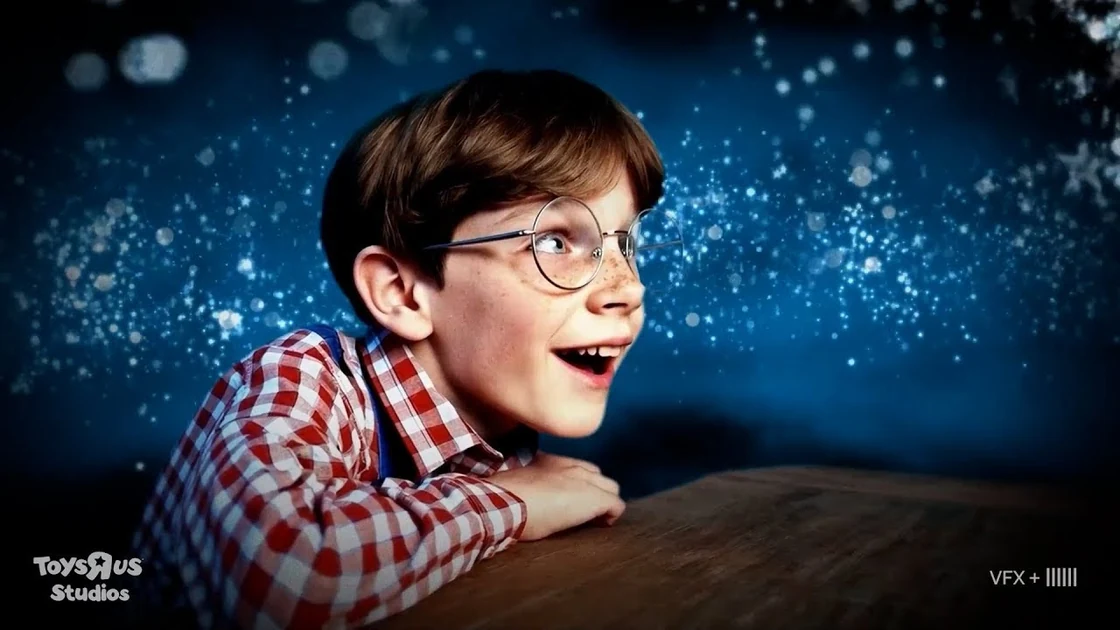
- Toys"R"Us, "The Origin of Toys" (right): Debuted at Cannes Lions using OpenAI's Sora, this brand film dramatized founder Charles Lazarus as a young boy dreaming up a toy empire. While it proved text-to-video could assemble a full narrative spot in a fraction of normal animation timelines, shifting facial features between cuts pulled viewers out of the story.

2. Where Stylized Worlds and Absurd Comedy Won: Svedka and Kalshi
When brands stopped trying to fake photorealistic heartfelt humans and leaned into stylized worlds or internet-native absurdity, the reaction flipped completely.
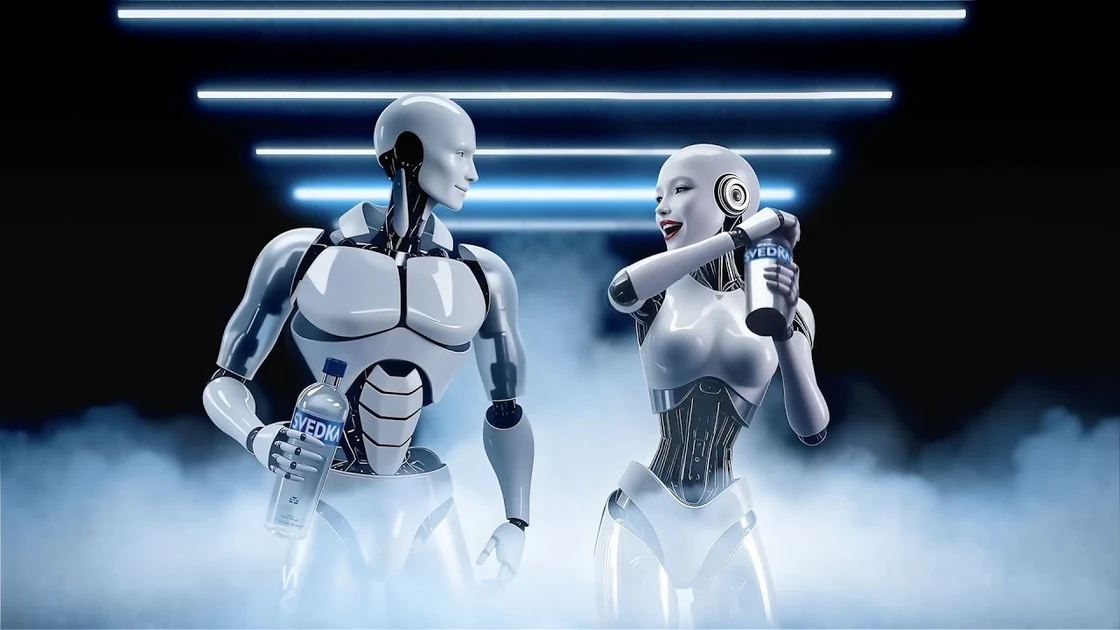
- Svedka Vodka, "Shake Your Bots Off" Super Bowl LX (left): For the 2026 Big Game, Svedka leaned straight into sleek chrome robots holding gleaming bottles under neon studio lighting. Because the protagonists were already stylized machines rather than sentimental human faces, the synthetic look felt intentional and on-brand instead of uncanny.
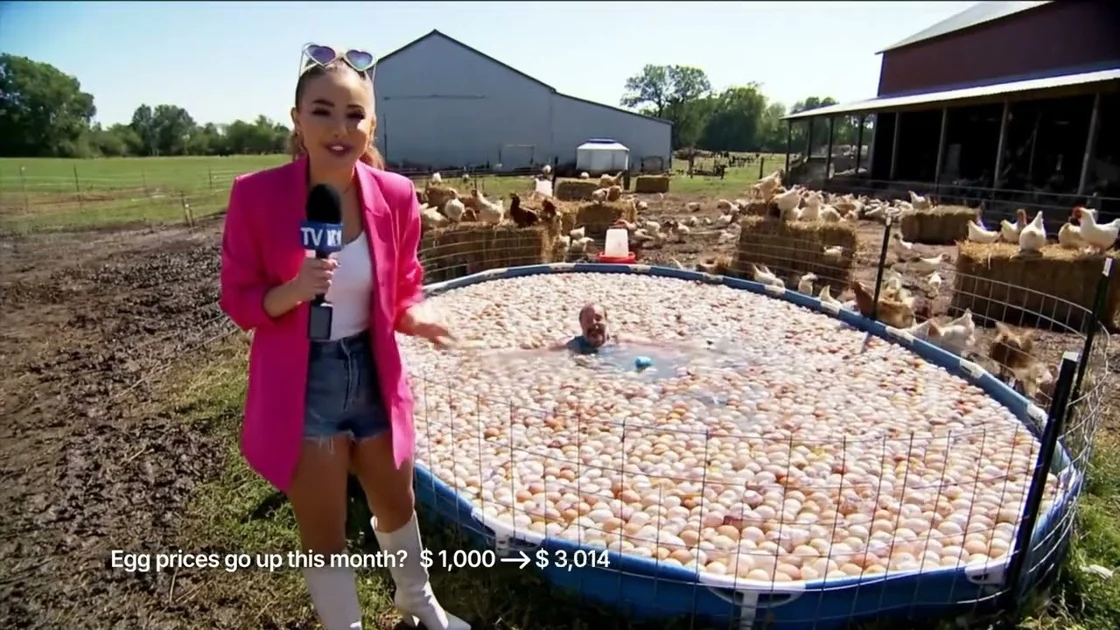
- Kalshi, NBA Finals Veo 3 Commercial (right): Produced in days on a tiny budget using Google Veo 3, Kalshi aired a chaotic montage of surreal scenes (including a field reporter standing beside a man swimming in an above-ground pool filled with eggs under "Egg prices go up this month? $1,000 -> $3,014"). The spot went viral organically because absurd humor turns AI's dream-like physics into the punchline.
3. Where AI Solved a Real Creative Concept: Heinz and Cadbury
The highest-awarded AI advertising examples did not use AI just to cut a camera crew. They built the entire idea around something only AI could pull off.
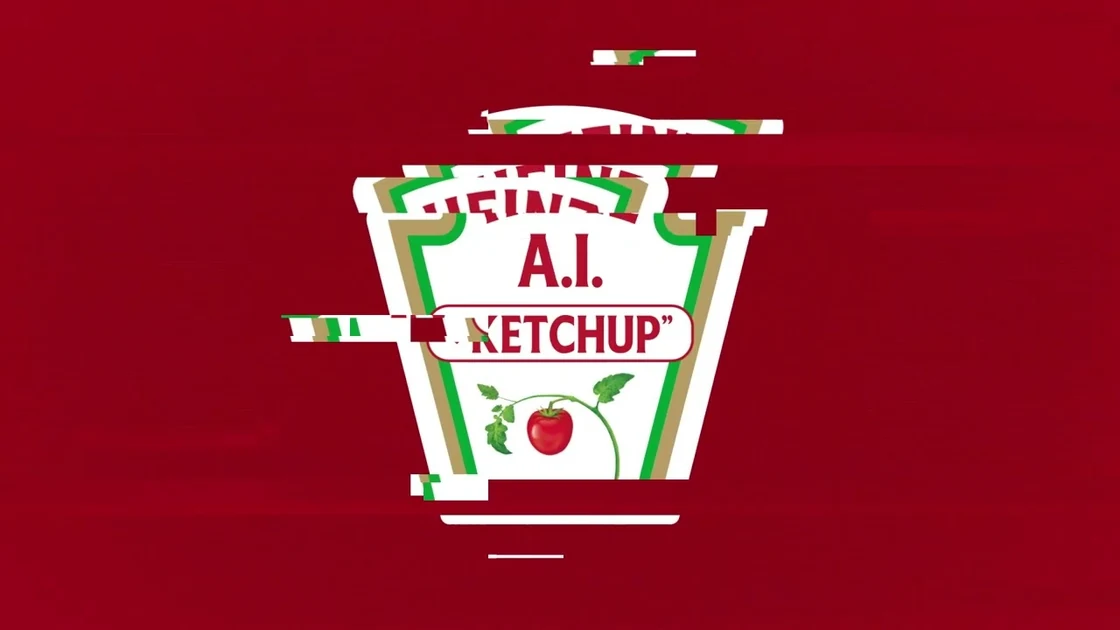
- Heinz, "A.I. Ketchup" (left): Heinz typed prompts like "ketchup" and "ketchup in space" into DALL-E 2 and published the unaltered outputs. Even distorted AI bottles still carried the unmistakable Heinz silhouette and keystone label, turning a tech gimmick into proof of iconic brand equity.
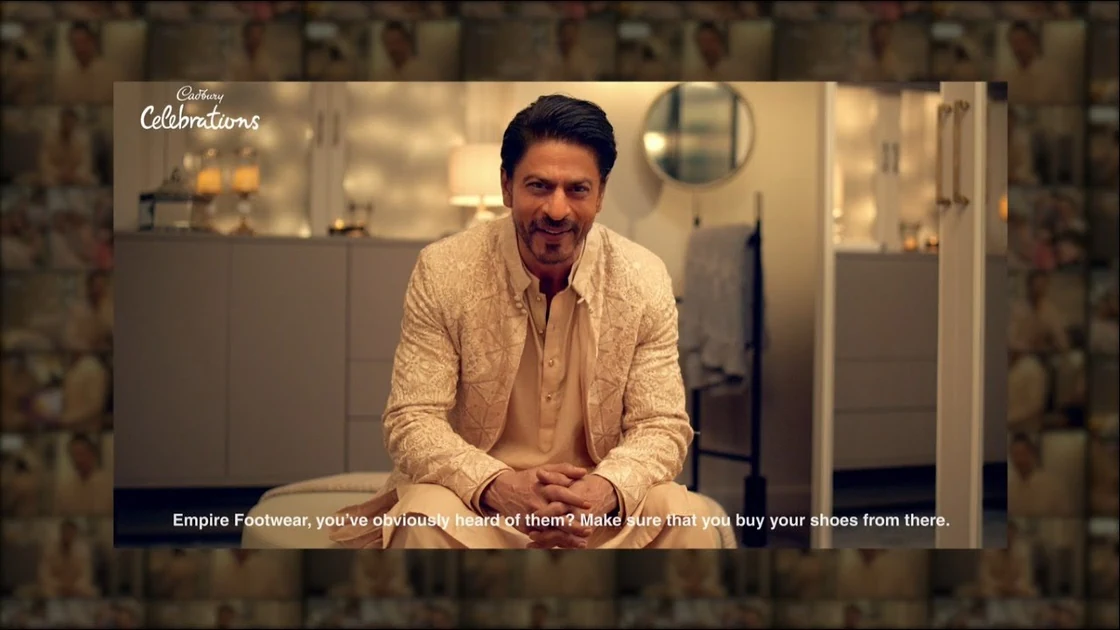
- Cadbury Celebrations, "Not Just a Cadbury Ad" (right): Using machine learning voice and likeness synthesis, Cadbury let thousands of small local shops across India generate personalized Diwali commercials featuring Bollywood star Shah Rukh Khan naming their exact neighborhood store (such as "Empire Footwear" below). It won a Cannes Titanium Lion because AI unlocked hyper-local personalization that was physically impossible to film.
12 Playable Direct-Response AI Video Ads Built to Convert on Meta and TikTok
Brand stunts earn press headlines, but DTC and telehealth brands do not buy media for Cannes trophies. You need AI video ads that stop the scroll in the first two seconds, pass strict platform compliance, and give Meta Andromeda genuinely distinct visual formats so your winners stop fatiguing every ten days.
Every example below is a real, launch-ready performance creative built on approved client claims. Click any ad to watch it with sound.
1. 3D Science and Mechanism Explainers (3 Playable Examples)
When a buyer is skeptical about how a formula or clinical treatment actually works, a talking head waving a bottle rarely closes the sale. 3D product animation takes the viewer inside the mechanism: microscopic enamel restoration, neural pathways, or dual-hormone signaling rendered cleanly so complex claims become obvious in seconds.
Notice what makes all three work as paid social ads rather than corporate explainers: each opens on an immediate visual hook (microscopic surface damage, a cutaway brain, or animated hormone messengers) before transitioning smoothly into the real product.
2. Animated Story-Songs and Jingle Ads (3 Playable Examples)
Standard direct-response videos announce "this is an ad" inside the first second, triggering an automatic thumb flick. Original jingle ads and Pixar-style story-songs read like entertainment first, carrying the viewer through a relatable frustration (stained teeth, an outfit that will not zip, or daily supplement fatigue) all the way through the offer.
Because custom vocals and stylized characters hold attention far longer than plain B-roll, story-songs consistently unlock cold top-of-funnel pockets that traditional UGC never reaches.
3. Felt Stop-Motion, Claymation, and Tactile Art Styles (3 Playable Examples)
Under Meta Andromeda, running ten similar talking-head clips causes the algorithm to cluster them into the same retrieval bucket. Tactile animated ads such as felt stop-motion, claymation, and knitted wool 3D look completely different from every selfie and stock clip in a viewer's Reels feed, forcing the auction to test them against fresh audiences.
These hand-crafted aesthetics also shine in sensitive categories like GLP-1 weight loss ads and men's health, where stylized characters let you name real customer pain points with humor and warmth instead of triggering body-shaming filters.
4. AI UGC Creators and Whiteboard Breakdowns (3 Playable Examples)
Entertainment formats win cold attention, while direct-to-camera AI UGC ads and structured whiteboards handle middle-of-funnel objections: dressing-room try-ons, clinical study breakdowns, and skeptic Q&As that answer the exact questions holding buyers back from clicking.
Unlike stiff single-shot avatar tools that look obviously synthetic, strong AI UGC pairs tight jump-cut editing, natural lighting, realistic environments, and sharp direct-response scripting written by human copywriters.
Brand AI Commercials vs. Self-Serve AI Slop vs. Performance AI Video Ads
Not all AI-generated ads belong in the same bucket. Here is how the three approaches compare when you are spending real media dollars.
| Dimension | Big-Brand AI Stunts (Coca-Cola, Svedka, Kalshi) | Self-Serve Template "AI Slop" | Performance AI Video Ads (Studio Pipeline) |
|---|---|---|---|
| Primary Goal | PR buzz, TV reach, cultural conversation | Cheapest possible video volume | Lower CPA, higher hold rate, scalable Meta and TikTok spend |
| Creative Direction | Agency concept built around novelty or spectacle | Auto-generated from a product URL with generic scripts | Human direct-response strategists and copywriters scripting from winning hooks |
| Visual Execution | High-concept scenes (robots, surreal gags, stylized worlds) | Stiff talking avatars, warped hands, unreadable product labels | Multiple distinct lanes: 3D explainers, story-songs, claymation, felt stop-motion, polished AI UGC |
| Paid Social Result | Great for awareness, rarely built for direct conversion | Low hook rates, fast comment backlash, wasted spend | Breaks creative fatigue by feeding Meta Andromeda fresh visual signals every week |
5 Rules That Separate High-Converting AI Ads From "AI Slop"
If you want AI-generated ads that actually beat your live human winners in an ad account, five production rules matter far more than which video model is trending this month:
- Start with a human direct-response script, never a raw prompt. Generative models do not know your buyer's objections, your compliance boundaries, or why your last ten ads stopped spending. Every winning AI ad starts with a proven hook, clear mechanism, and tight offer structure written by performance copywriters.
- Match the visual style to what AI does best. Stylized 3D explainers, Pixar-inspired characters, claymation, felt stop-motion, and fast-cut native UGC consistently outperform awkward photorealistic close-ups of people trying to act sentimental.
- Protect product accuracy relentlessly. Nothing destroys buyer trust faster than a warped bottle label, misspelled logo, or melted packaging. Lock real product photography into hero frames and QC every second for hands, text, captions, and audio sync before launch.
- Use AI for true format diversity, not 50 clones of one clip. Under Meta's retrieval architecture, shipping genuinely different visual worlds side by side unlocks far more scale than swapping three words on the same avatar.
- Stay ahead of platform AI disclosure and compliance rules. Both Meta and TikTok maintain synthetic-media labeling policies (and EU regulations enforce transparency on AI-generated likenesses). Never present an AI character as a real licensed physician or invent unverified product claims, and keep approved disclosures clear on screen.
How to Put AI Video Ads Into Your Weekly Testing Pipeline
The brands winning with AI commercials in 2026 treat generative production as a repeatable performance creative system rather than a one-off viral gamble. Pair top-of-funnel pattern interrupts (animated story-songs, stop-motion, claymation, character metaphors) with analytical closers (3D science explainers and objection-handling AI UGC), rotate fresh concepts weekly, and judge every cut on live account CPA and hold rate.
Want to see more live examples across supplements, telehealth, oral care, and apparel? Browse our full video ad portfolio, inspect how our team scripts and QCs every cut, or apply for a free 15-minute creative walkthrough with our team.
Frequently asked questions
What are the most famous examples of AI commercials?
The highest-profile brand AI commercials include Coca-Cola's 'Holidays Are Coming' AI remake, Toys R Us's OpenAI Sora brand film ('The Origin of Toys'), Svedka's 2026 Super Bowl LX robot commercial, Kalshi's viral Veo 3 NBA Finals spot, Heinz's 'A.I. Ketchup' print and social campaign, and Cadbury's hyper-personalized Shah Rukh Khan Diwali campaign.
Why did the Coca-Cola AI commercial get backlash?
Coca-Cola applied generative video to one of its most nostalgic, emotionally familiar holiday commercials. Viewers immediately noticed stiff human smiles, gliding truck wheels, and subtle visual glitches, making the spot feel uncanny rather than warm. Stylized worlds like Svedka's robots or absurd comedy like Kalshi avoided that trap because the synthetic look matched the concept.
Do AI-generated ads actually work on Meta and TikTok?
Yes, when built around human direct-response strategy and strict quality control. Generic auto-generated avatar clips fatigue quickly, whereas well-scripted 3D science explainers, animated story-songs, felt stop-motion, claymation, and tightly cut AI UGC ads perform strongly because they hold attention and give Meta Andromeda genuinely distinct visual signals.
How do brands avoid making their AI ads look like 'AI slop'?
Start with a human-written direct-response script rooted in real customer objections, choose visual styles that generative video handles cleanly (3D explainers, stylized animation, tactile stop-motion, or tight jump-cut UGC), lock real product photography into hero frames so labels never warp, and review every second for hand, caption, and audio errors before launching.
Do AI-generated ads require disclosure on Meta and TikTok?
Meta and TikTok maintain synthetic-media disclosure rules for photorealistic AI-generated people or altered real-world events, and regions like the EU enforce AI transparency standards. In regulated verticals such as telehealth, brands must also keep approved claim disclaimers on screen and never portray an AI character as a licensed physician.
How fast can a brand produce AI commercials compared to a traditional shoot?
Traditional studio commercials and creator reshoots typically take weeks of casting, shipping, location booking, and post-production. A structured AI video ad pipeline lets brands script, generate, edit, and QC launch-ready variations in days, making it practical to test multiple distinct visual formats every week.
Let’s turn these ideas into winning ads.
We script and produce launch-ready AI video ads daily for DTC and telehealth brands.
Work with us